
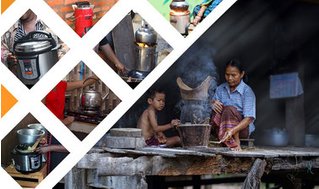
Access to clean cooking solutions, including modern stoves and cooking fuels, is often overlooked as part of the wider energy access agenda. This is surprising, given that four billion people – over half the world’s population – lack access to modern energy cooking service, also known as MECS, for their daily cooking practices. This means that families around the world continue to rely on fuels like wood or charcoal and rudimentary stoves, leading to devastating health, climate, environmental and gender impacts that cost the world an estimated 2.4 trillion dollars each year.
While the imperatives are clear, attention and focus on clean cooking have not been commensurate. To address this gap, the World Bank’s Open Learning Campus (OLC) and the Energy Sector Management Assistance Program (ESMAP) are partnering in a virtual Knowledge Exchange (KE) that builds on the recently launched, first-of-its-kind self-paced e-learning course titled The Hidden Side of Energy Access: Understanding Clean Cooking. The KE is a month-long interactive workshop series that will feature speaker presentations from various clean cooking innovators and practitioners, discussion forums, and self-paced exercises across the four modules of the e-learning.